
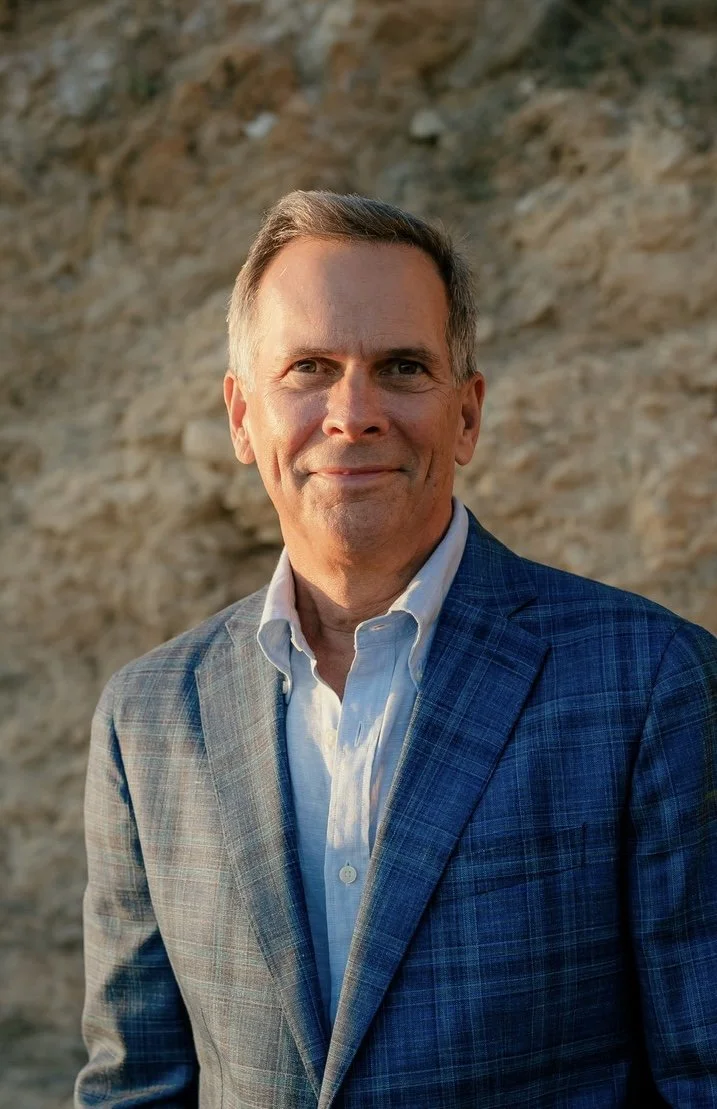
About Jeff
JEFF PIERSON has written extensively for over three decades about the people, products, and companies transforming the global energy industry. As the author of Battery Revolution, Jeff brings his first-hand career experience into a sweeping story about the promise and pitfalls of advanced technology development.
Q & A
In his debut novel, Battery Revolution, Jeff Pierson shows us how a creative story about two technology companies struggling to control rogue AI on the power grid can serve as a unique educational resource for students, executives, and self-learners of all ages.
Q: What caused you to write this book?
Jeff: I didn’t plan on writing a novel! In early 2024, I was working on a junior executive training concept with an online education company. The plan was to help mostly college students and young professionals gain a core set of business operations, or “BizOps” skills, which they could highlight to executive recruiters and our network of small to medium-sized employers.
Q: What was the result?
Jeff: We fell prey to a textbook mentality. The fact is, people learn best by falling into situations where they are truly tested. So I decided to shift gears, to write an original story about parts of my own life, and what sort of understanding people need for an entrepreneurial career.
Q: Where does Battery Revolution fit in terms of a book genre?
Jeff: It’s business fiction, like previous management-oriented novels such as Eliyahu Goldratt’s The Goal, or Spencer Johnson’s Who Moved My Cheese? But it also has aspects of a mystery, suspense, and technothriller novel. Basically I wrote the book so it could be read in two different ways. The first is when you’re assigned to study or work in areas like energy storage, power grid operations, industrial manufacturing, supply chain, infrastructure security, or AI automation. So you read the book to familiarize yourself with all the inside shop talk and industry jargon. I didn’t want to leave that stuff out, because it reminded me of my own experiences being a non-technical person on the factory floor, and because that’s how Amelia and her colleagues think and talk in real life!
Q: What’s the other way to read the book?
Jeff: Enjoy the novel and follow the suspenseful plot. That’s where human conflicts and emotions burst out. Even with a few wildly improbable scenes, it shouldn’t be hard to imagine living and working in this world.
Q: What central issues did you explore in the book?
Jeff: The core question is the one nobody can easily answer. Who decides how we will produce, store, and deliver electricity? Underneath that key concern are plot threads showing our societal anxieties about machine control, and how our individual mindsets and fears may influence any openness to change.
Q:Talk about your protagonist, Amelia Chen.
Jeff: Amelia is a bright materials scientist born, like her parents, in Southern California and getting her PhD in Pittsburgh at the start of the book. She’s really an all-American kid—personable and confident as a battery researcher, but after her remarkable discovery, she gets caught up in the tech world and thrown off kilter. The most interesting aspect of Amelia’s story might be how she confronts her preconceived notions of what success and happiness really mean.
Q: How did you pack so much technical subject matter into a suspenseful, easy-to-read novel?
Jeff: I layered the writing, with one track showing the early stages of growing an energy technology venture, and another, more imaginative story about the human beings working inside and around that venture. I drew on what I knew about battery storage, fund investing, policy making, and business consulting. I conducted research to fill gaps, then I got help from people with more expertise in physics, the power sector, and book writing than I will ever have.
Q:Who is your target audience?
Jeff: Avid readers who enjoy learning new things and being surprised about the “what ifs” inside industries of tomorrow. Also, students, apprentices, career professionals, corporate teams, investors, trade associations, policy makers, or just people looking to advance or pivot into new areas.
Q:You’ve described this book as an “ongoing learning experiment” both for yourself and for readers. What do you mean?
Jeff: We don’t know how this story of our electricity grid ends. My basic rule for everything in Battery Revolution was to give the reader reasons to believe. There’s always an unsung human element in managing power technology, and there are big dilemmas we need to face in the near future.